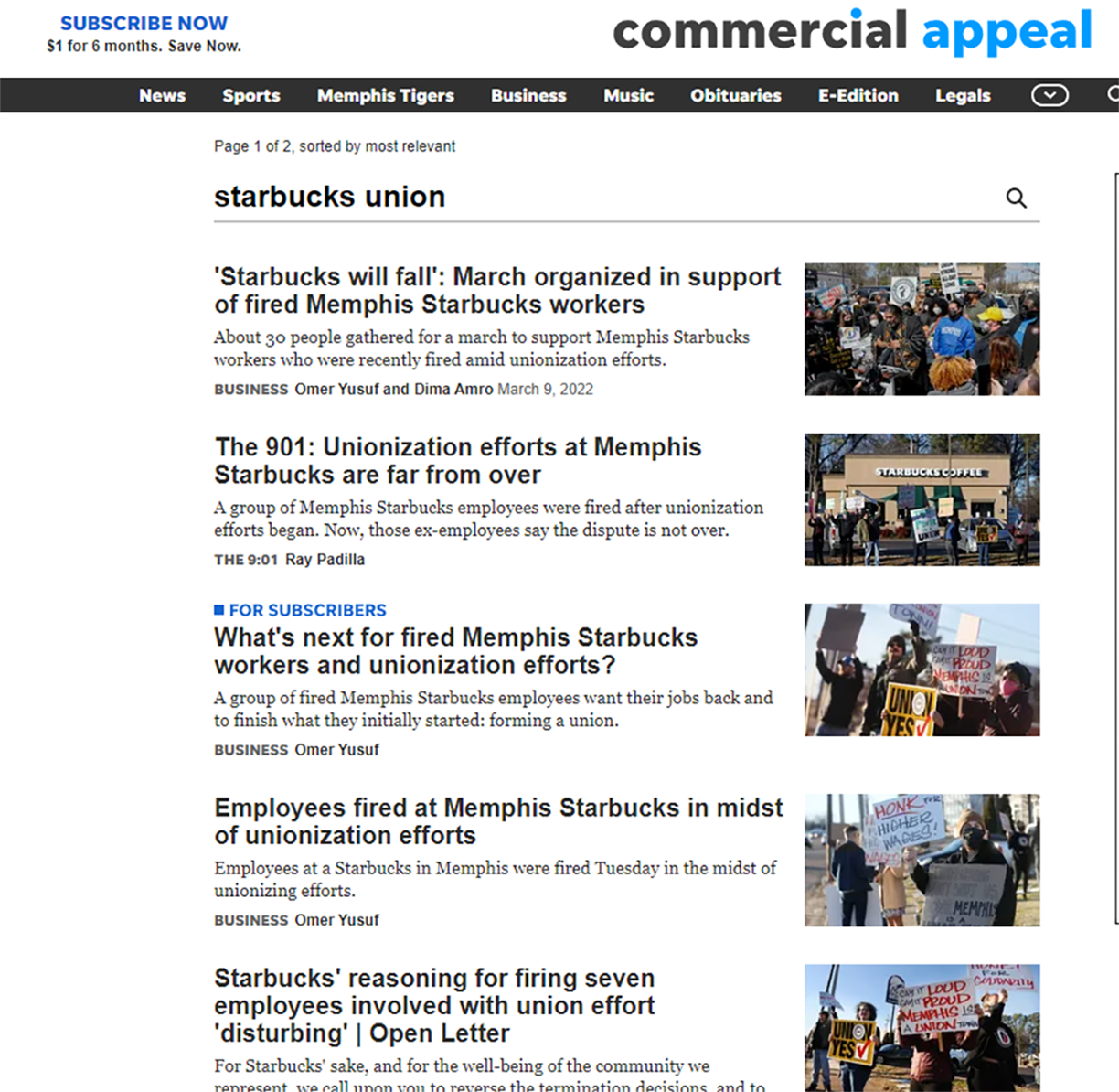
(BenQQ 3.12.22) To date, the Commercial Appeal (CA) has followed the story of some local Starbucks employees trying to unionize their employer. The apparent union organizer, the Rev. William Barber, told the Memphis group 120 stores were voting on union representation earlier this week.
According to the CA stories, a number of employees allege the company fired them because they were union organizing. The company, which was apparently involved in its own anti-union campaign, said they were let go because of safety violations.
By the way, there are good journalistic reasons to cover both sides of the story. For example, one of the standing demands of the organization reportedly representing the employees is raising the minimum wage to $15. Some economists say that wage level would drive up prices and/or close businesses.
Finally, I missed in the stories two things: 1) how much would the price of a regular coffee go up under unionization and 2) How much would said price rise drive away the current customer base.
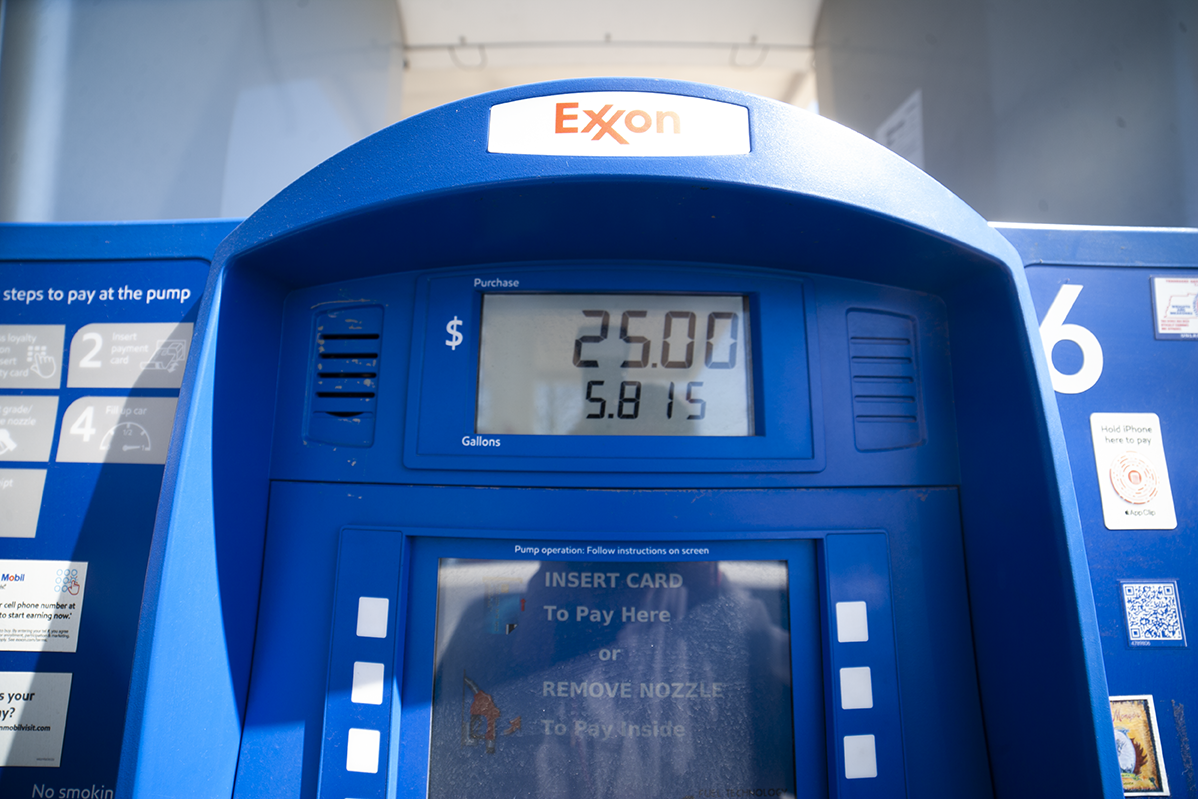
For example, a sausage biscuit and regular coffee is $8.25. (Reality picture below) The question: will some customers flee, say, to McDonalds for similar fare at a lower price? I'd say probably not. From what I've noticed people like Starbucks for other reasons like business meetings and possible romantic startups, among others. (Neither McDonald's nor Starbucks showed prices on their web sites and I'm snowed in today so I can't trundle up to McDonald's to look at the menu. Perhaps someone could shoot over a picture of the McDonald's price.)
Anyway, if I were doing PR for Starbucks, I'd make sure everybody knew there are legitimate reasons in the modern world why a company does not want to see itself unionized--especially in an inflationary period fed by an anti-business administration. This is not the 1950's where American imagination was influenced by On the Waterfront with Marlon Brando and Starbucks is not that big bad exploitive company where he just wanted to get a job.
But all things are connected. If Biden continues to make war on the economy, McDonalds for Starbucks customers just might begin to look ok. Tables are smaller but they might do. But I'm not unsympathetic to the "partners." (How is it somebody came up with the idea of calling employees 'partners' anyway?)
Indeed.com shows a barista working at Starbucks in Bartlett, an incorporated city by Memphis, as making an average salary of 10.37/hr with $11.00 in daily tips. After taxes and deductions, that bread would be sliced pretty thin if you had to support yourself, let alone someone else.
It is not unintentional that a local labor/management dispute would draw a flamboyant mediagenic character like Rev. William Barber who is sure to get great media coverage from the CA. A good picture is worth a thousand leftie posters. (See the collection of CA Barber news shots herein.)
In today's woke media environment, companies can expect they are going to be put behind the 8 ball journalistically in stories like this. Personally, I would have crafted the story between the contrasts of personalities of management vs those of employees. Perhaps the reporters tried and more likely Starbucks management brought a lot of the bad press on themselves.
Did Starbucks rely on their crafted image of liberalism and anti-colonialism to insulate themselves in local fronts of the union battle? The national organization for unionizing Starbucks
https://sbworkersunited.org/ actually gives the company credits for its employee policies.
Rev. Barber is billed as co-chair of something called the Poor People's Campaign (PPC) that has a web site to make Karl Marx blush with eterno-ideo transcendence.
The PPC is not a labor organization like the CIO. The PPC has broader economic goals with deep left ideologies. Policies that do not raise the economic and health status of the poor are inherently "immoral," the PPC seems to assert.
The CA story did have a link to
poorpeoplescampaign.org but did not provide information about that organization. The story did not link to
starbucks.com, ironically, as mentioned, a site showcasing its liberal values with pricey coffee products.
For example, what was not in any of the CA stories was what the Poor Peoples Campaign wants tax payers to support--ideological mantras like expansive now mostly anachronistic Covid-19 "relief" items, "quality health care for all;" a "reconstructed and restoration" agenda; "update the poverty measure" to include all possible government appropriations; "quality housing for all" that includes rent freezes, assistance, prohibiting rent increases, 'cancelling rent and mortgage payments that cannot be paid'; and finally in this category 'Move the burden of proof off of renters and households that are facing eviction to the financial interests that are seeking evictions.'
You get the picture. Barber's is an appeal to the underclass to stick it to the man. His structural economic bleeds would drain the middle class dry until everybody was as poor as the people for which they have built a business to represent.
And, according to their site, if their priorities don't come to fruition, the president should use executive orders to make all of the PPC demands happen--orders like Biden's previous ones that have put the country into an early energy, inflation and foreign policy tailspin.
The story wokishly angled the issue as a straight union issue. Poor employees aligned with a local activist preacher type standing against a big corporation.
Beyond the low salary issue, the Starbucks Workers United out of Buffalo, NY say on their web site, they want to be treated as equals in running the company. If in fact it came to pass some Starbucks stores began to operate as independent units, kind of like city-states unto themselves within a geo region, what would happen to the corporation known as Starbucks, Inc.? No doubt more creative things could be done by bright baristas for the communities they serve, literally. And, no doubt, other units would collapse with
mismanagement.